By Mikey Wilson, ISA Certified Arborist (#UT-4612A), 15+ years as an arborist · Published October 13, 2026 · 11 min read
The best time to prune trees in Utah is winter or early spring, late in the dormant season, before leaves form. That is my default for Salt Lake City, and it is the ideal time for most deciduous trees. It is not the whole answer, though, because the tree itself can change it: the species, why you are cutting, how healthy it is, and whether a limb is already a hazard. Our tree trimming and pruning work starts from that default and adjusts tree by tree.
- Why "what month is best" is the wrong first question
- Dead branches can't wait for the calendar
- When to prune trees in Utah: the dormant season window
- Watch the month-by-month guide
- Month-by-month pruning calendar for common Salt Lake City trees
- December to February: winter
- Late February to early March: fruit trees
- Spring: March to May
- Summer: June to August
- September to November: is October too late to prune?
- What is the 1-2-3 rule?
- Park strip and street tree permits
- Frequently Asked Questions
Why "what month is best" is the wrong first question
If you have a cracked limb hanging over your driveway, you can't hold off until February. If you have a lilac, leave it until after it blooms. Same calendar, opposite answers.
Most people ask "what month should I trim my tree?" first. It is a natural question, and it skips the better one: what does this tree need? A calendar can't tell a mature silver maple from a young crabapple, and it can't see a limb that split in a windstorm. So I look at the tree first and the date second.
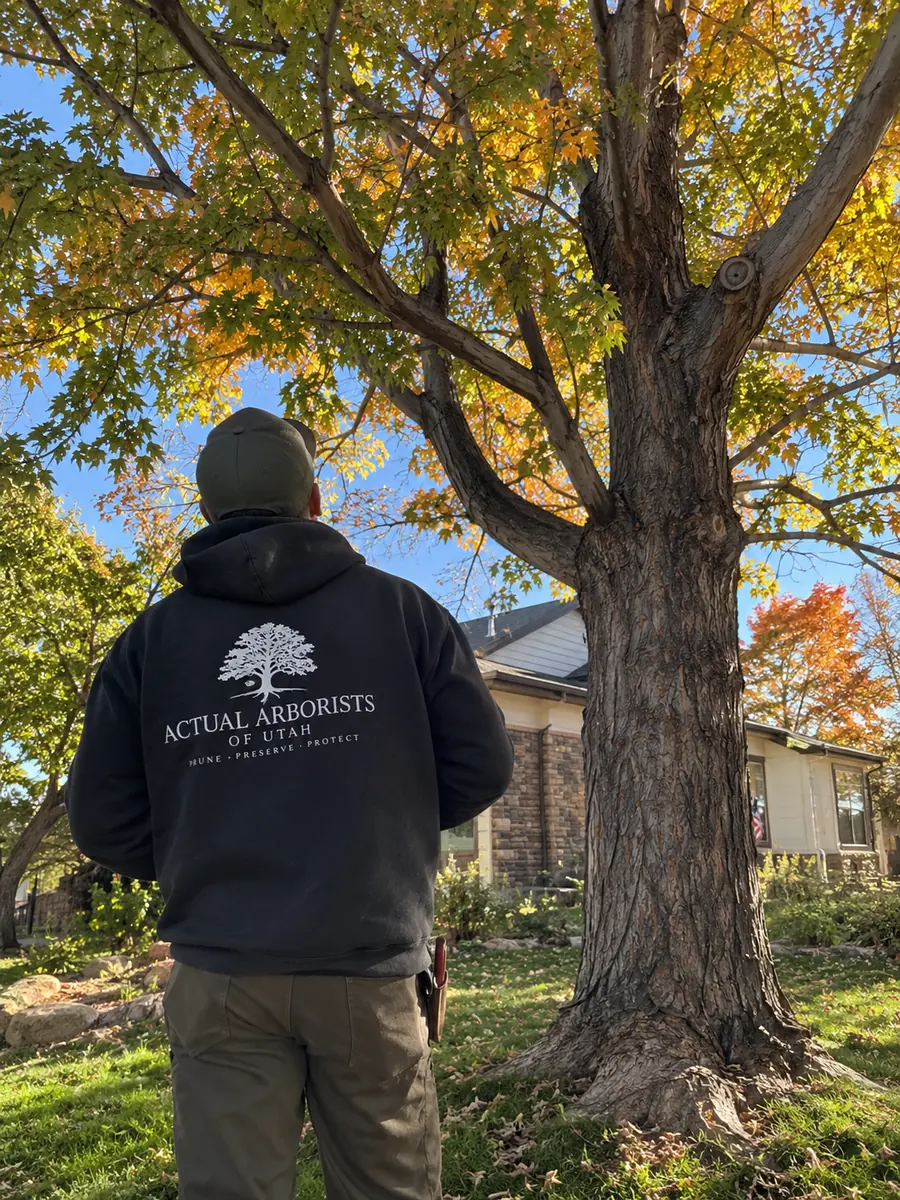
Diagnose first, then schedule. Here is what I check before picking a date:
- The species. Some trees bleed sap when they are pruned as winter ends, and flowering trees and shrubs like lilac, forsythia and flowering cherry should be pruned right after they bloom.
- Your goal. Shaping a young tree, thinning a crowded crown and clearing a roofline are different jobs, and they can land in different months.
- The tree's health. If a tree looks stressed or sick, it needs a proper diagnosis before anyone picks up a saw.
- Pests and disease. Elm bark beetles, which spread Dutch elm disease, emerge from April to mid-May and through the summer. That is one more reason to leave routine elm pruning for the dormant season, though work that needs doing gets done when it needs doing.
Dead branches can't wait for the calendar
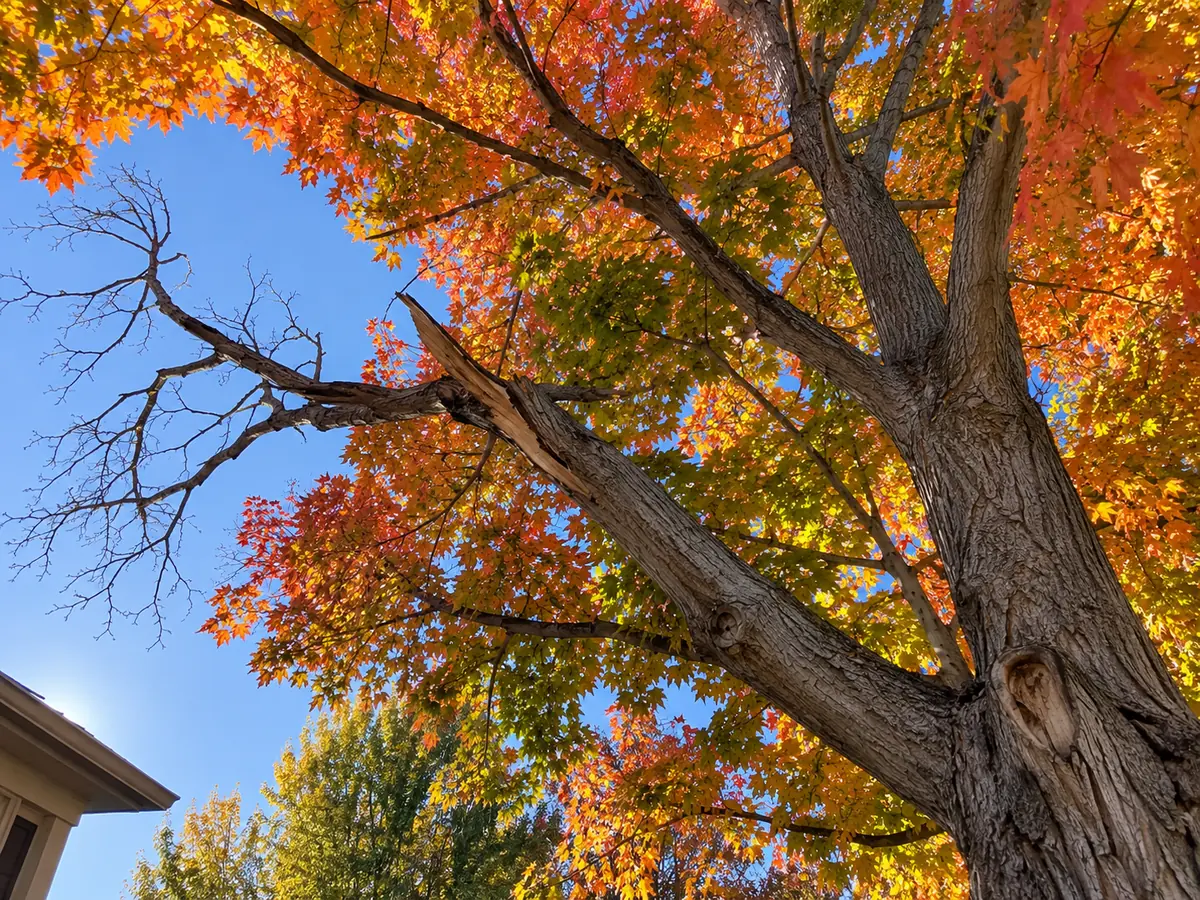
Dead branches, cracked limbs and hanging limbs shouldn't be left for the right month. The ISA Rocky Mountain Chapter says dead or dying branches can come out at any time, and that broken or hanging branches are hazards that should be removed promptly. Branches with splits or cracks at a joint can be weak. If you can't tell how serious a crack is, that is what a tree risk assessment is for.
Putting off a damaged limb has its own risk. I saw how that plays out in Liberty Wells. The homeowner had read that winter is the right season to trim, so they left a split limb on their old tree until winter. Then an early November storm came through. The limb tore off and broke a fence shared between the neighbors.
People treat timing advice like a rigid rule, but it is a starting point. ISA also warns against pruning only in a crisis and against deferring pruning until limbs are large.
Fruit trees run on their own schedule: late February to early March. Dead or damaged limbs are the exception. They come out whenever you notice them.
Tell me what you're seeing and I'll tell you whether it can. Get Free Estimate or Call (801) 809-2611, Monday to Friday, 9 AM to 5 PM.
When to prune trees in Utah: the dormant season window
Late winter into early spring is the sweet spot for most trees here. The leaves are gone, growth has stopped, and the tree is basically taking a long nap, you know?
So why does a sleeping tree matter? The ISA Rocky Mountain Chapter says the best time to prune living branches is late in the dormant season or very early in spring, before leaves form. Growth is maximized and wounds close faster. Many guides say to prune between November and March. That is the right neighborhood, but I aim for the end of that stretch.
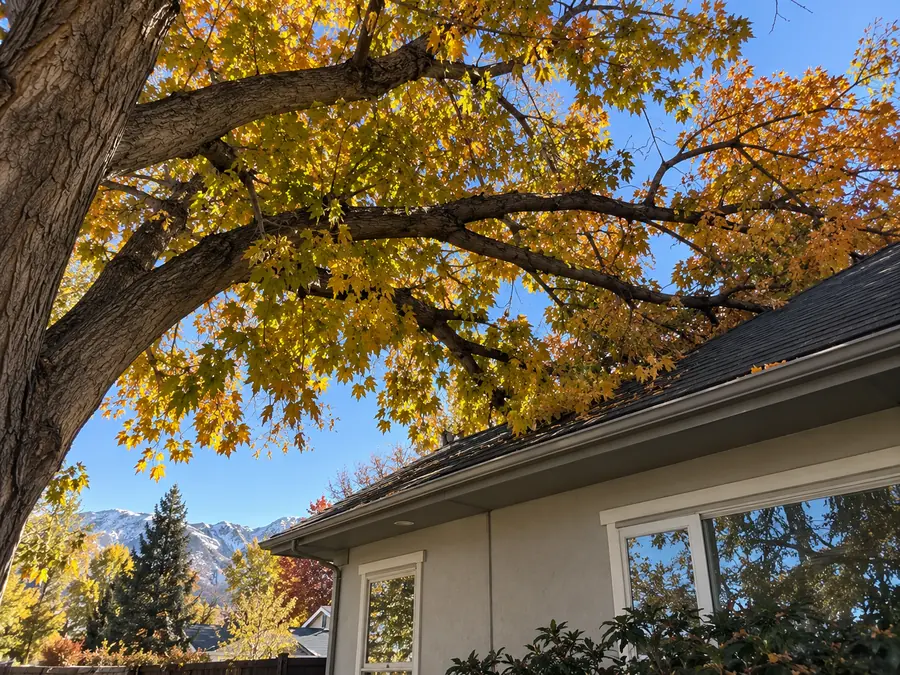
There is a practical side too. With bare branches I can read the tree's real shape. Weak forks, crossing limbs and dead wood show up in seconds, and in July they are hidden behind a wall of green. Cold weather also slows most insects and decay fungi.
Structural pruning on young shade trees while they are dormant is one of our core services, and this is the window for it.
Not every winter day is a good pruning day, though. Salt Lake City winters swing wildly: one week it is ten degrees and thick with inversion, the next it is fifty and sunny. Wood that is frozen solid can crack or tear instead of coming off cleanly, and pruning nudges a tree to break dormancy and start growing. This is how I typically time it:
- Pick a stretch of days where the temperature stays above freezing, ideally from the mid-30s into the 40s.
- Check the forecast. Don't prune into a warm spell if a hard freeze is on the way.
- Skip days right after a heavy, wet snow. Loaded limbs are already under stress.
- Watch the buds. Once they swell, the dormant window is closing.
- Try to book early in the season. Late February fills up quickly for most crews.
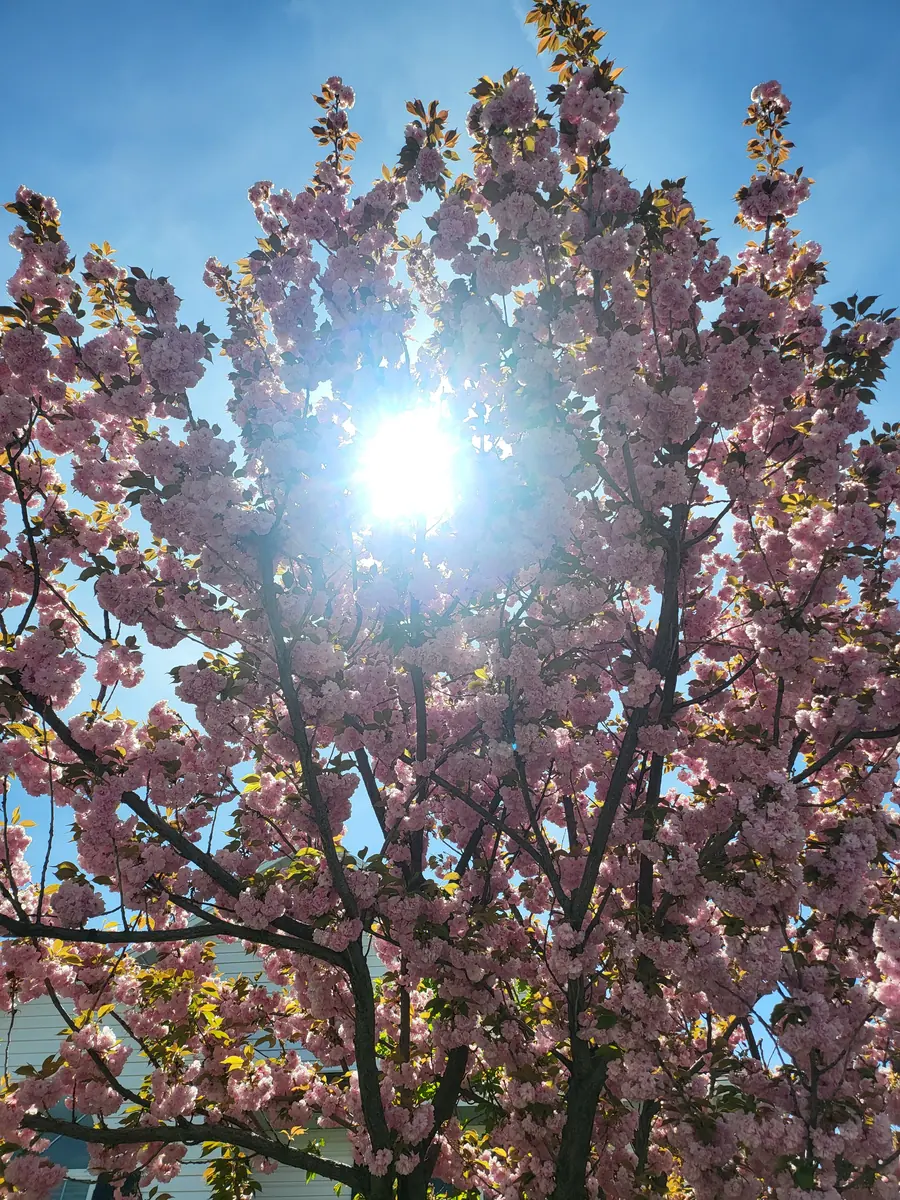
- Leave flowering trees and shrubs like lilac, forsythia and flowering cherry alone until after they bloom.
That last one trips people up. Prune a lilac in February and you are removing the buds that would have flowered this spring. The shrub will be fine, but there won't be blooms.
Some trees bleed sap when they are pruned as winter ends. Maples, birches, walnuts and elms are among them. It looks alarming, but it doesn't hurt the tree, and it stops within a few days.
A homeowner near Liberty Park ran into exactly that last March. She called me worried that her silver maple was diseased or dying. She had trimmed it herself during a warm week, and sap ran from every spot she pruned for days. The bark around two of the spots even started to peel. It was not fatal, thankfully, and the sap itself was nothing to worry about.
This is the window for dormant pruning, so ask before the buds swell. Get Free Estimate or Call (801) 809-2611, Monday to Friday, 9 AM to 5 PM.
Watch the month-by-month guide
Prefer to watch? Open the video on YouTube.
Month-by-month pruning calendar for common Salt Lake City trees
Most trees around the valley do best with a trim in the cold months, but not every tree follows that rule, and that is where people get confused. The calendar below starts from the ISA Rocky Mountain Chapter's timing guidance, and I adjust it tree by tree on the job.
December to February: winter
This is dormancy. The leaves are down, so the structure is easy to see, and the best pruning comes at the end of it, just before growth picks up. Elm bark beetles emerge from April to mid-May and through the summer, so these months are the easy window for routine elm work.
Late February to early March: fruit trees
Prune fruit trees grown for harvest now: apples, pears, peaches, fruiting cherries, plums and apricots. Peaches, nectarines and apricots fruit on one-year-old wood, so they get pruned harder than apples and pears.
Spring: March to May
Through March and April, finish pruning before the buds swell. Lilac, forsythia and ornamental flowering trees, like flowering cherry and crabapple, are the opposite: they hold until the flowers fade. By April and May, trees are pushing out new growth, and the bark is tender and easily damaged, so any pruning has to be careful. Stick to dead, broken or hazardous limbs, plus spring bloomers once their flowers fade, and save other shaping for next winter.
Summer: June to August
Light work only. Summer pruning can be done, but expect some dieback around the work. Summer is a good time to pull water sprouts while they are only 2 to 4 inches long.
Blue spruce and Austrian pine are straightforward. The dormant window works for them. You can also work in June and pinch each new candle back by about half, which keeps the tree dense.
September to November: is October too late to prune?
For routine pruning, October isn't the strongest choice. Wounds made in fall may be more easily infected with decay organisms. Dead, cracked or hanging limbs are the exception.
Last autumn, a homeowner in Sugar House called me in late September. A helper had trimmed her crabapple hard about two weeks earlier. By spring, several of the open cuts had dieback and decay at the edges. I took the damaged branches back to clean wood that winter, and the tree is recovering, but it lost two seasons of blooms.
What is the 1-2-3 rule?
The 1-2-3 rule is the three-cut method I use to take a branch off without tearing the bark. The ISA Rocky Mountain Chapter describes it like this:
- Cut 1: a shallow undercut on the underside of the branch, away from the branch collar, which prevents bark tears if the branch drops suddenly.
- Cut 2: a cut through the branch just beyond the undercut, which removes the bulk of the weight.
- Cut 3: a final cut just outside the branch collar, the swollen area where the branch meets the trunk.
The two most common mistakes both happen at Cut 3. A flush cut injures or removes the collar, and a stub cut leaves too much branch behind. Either one can open the tree to pests, disease and decay. Leave wounds uncovered so the tree's own defenses can take care of them.
Whatever the month, ISA says a mature tree should lose no more than one-quarter of its foliage in a growing season, and a young tree up to one-third.
Park strip and street tree permits
Check who owns the tree before you prune it. If it grows in the park strip between your sidewalk and the street, it may be in the public right-of-way. Salt Lake City Urban Forestry requires a permit to remove, prune or plant any tree in the public right-of-way, and it only issues those permits to arborists certified by the International Society of Arboriculture. Call the Urban Forestry office at (801) 972-7818 to find out whether your tree is in the right-of-way before any work starts.
The ISA Rocky Mountain Chapter recommends hiring an ISA Certified Arborist when a tree can't be pruned from the ground, is hazardous, is near utility lines, or has large branches to remove. That is the work we do. See our tree trimming and pruning service.
Tell me about your tree and I'll tell you when to trim it. Get Free Estimate or Call (801) 809-2611, Monday to Friday, 9 AM to 5 PM.