Tree Health, Disease & Pest
If the issue is decline rather than overgrowth, we diagnose the actual cause and connect you with an authorized specialist for treatment.
Explore service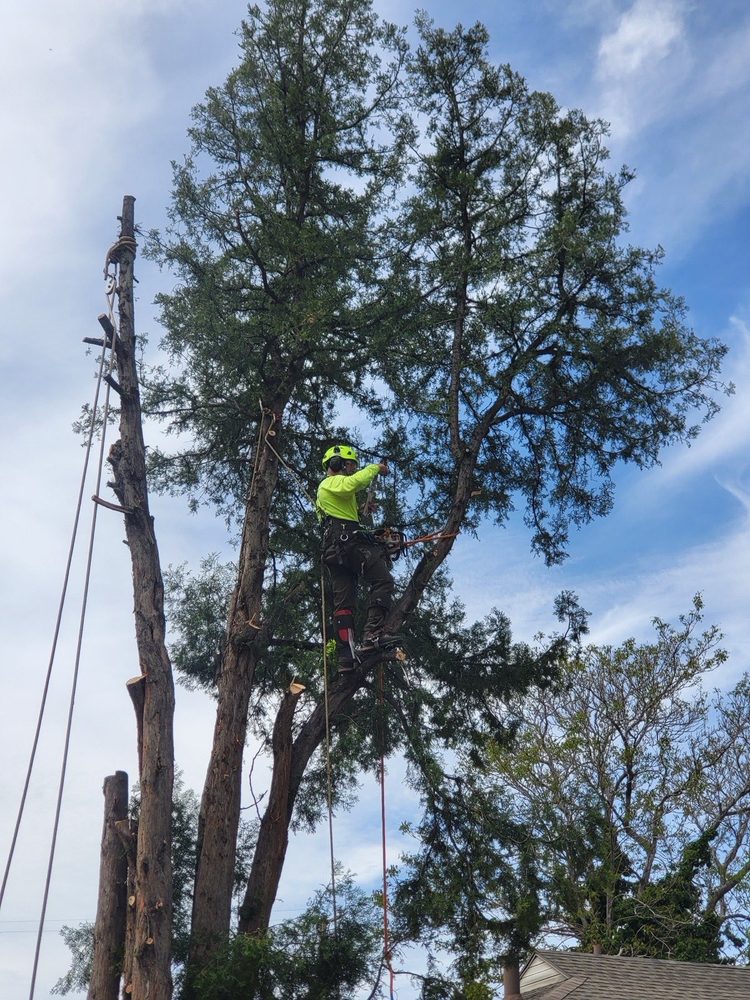
Done wrong, pruning invites disease and weakens a tree for years; done right, it improves structure, safety, and how your whole yard looks. We prune to arborist standards — and tell you what each tree actually needs.
We prune to arborist standards: clearing limbs off your roof and power lines, shaping for health, and timing winter and dormant-season work for when trees recover fastest. Whether it's one overgrown maple or a yard full of trees, we'll tell you what each one actually needs.
Routine, correct trims keep small problems from becoming expensive ones — and avoid the topping and over-thinning that quietly ruin a tree. ISA's guidance on proper tree-pruning practices is blunt about why: topping is “perhaps the most harmful tree pruning practice known.” Where a limb is more about structural weakness than overgrowth, cabling and bracing is sometimes the smarter fix.
Pruning also protects health: clean cuts and good airflow reduce the conditions that disease and pests exploit.
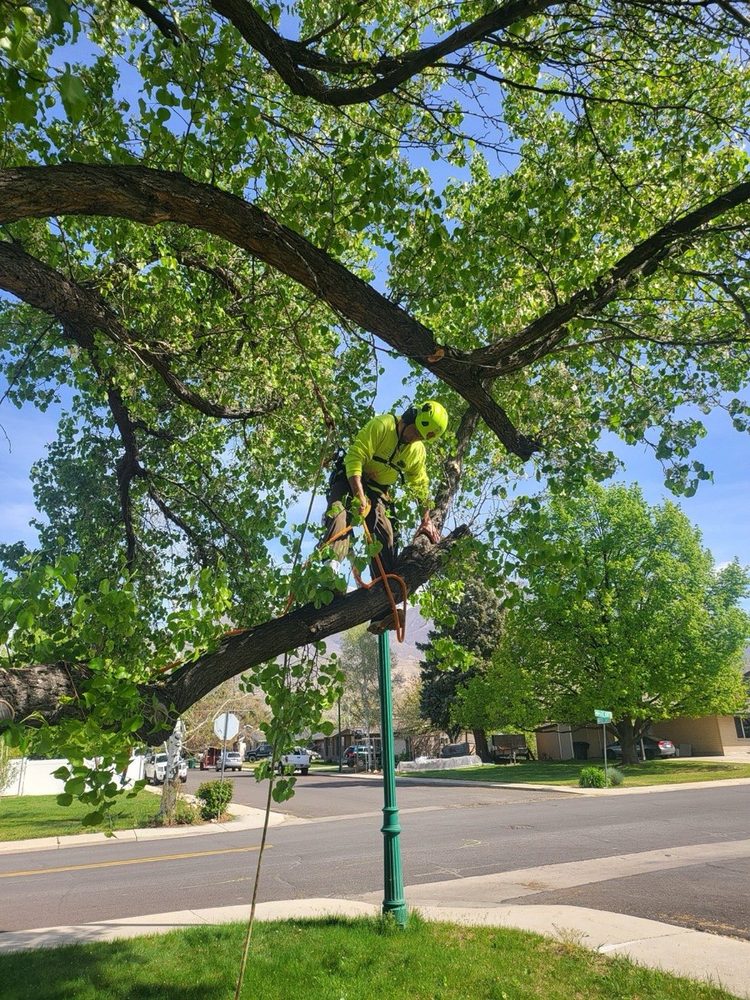
From fine ornamental shaping to heavy structural work, each approach is matched to the tree and the season.
Selectively removing interior limbs to improve light and airflow without changing the tree's overall shape.
Reducing height or spread with proper reduction cuts — the right alternative to harmful topping.
Removing dead and dying limbs that drop without warning, especially on mature shade trees.
Careful trimming and shaping of feature and specimen trees for clean, healthy form.
Pruning for structure, light penetration, and better fruit on apples, cherries, peaches and more.
Winter work that corrects structure while the tree is dormant and recovers fastest.
Shaping and maintaining hedges and shrubs to keep them dense, tidy, and healthy.
If the issue is decline rather than overgrowth, we diagnose the actual cause and connect you with an authorized specialist for treatment.
Explore serviceSupport weak unions and heavy limbs so a valuable tree can stay standing safely.
Explore serviceWhen pruning can't make a tree safe, we remove it cleanly and protect everything around it.
Explore serviceFor most shade and ornamental trees, late winter and the dormant season are ideal — the tree isn't actively growing, disease pressure is low, and structure is easy to read without leaves. Some species are exceptions, which is why we recommend the right timing for each tree. Dead, broken, or hazardous limbs can be removed any time of year.
People use the words interchangeably, but proper pruning is about long-term health and structure — removing the right limbs, at the right points, to ANSI A300 standards. Bad trimming (topping, stubbing, over-thinning) invites decay and weak regrowth. Mikey prunes for what each tree actually needs.
Yes. We clear limbs off roofs, gutters, and structures, and prune for safe clearance — using careful rigging so cut limbs are lowered, not dropped. For work near energized lines we keep proper clearances and coordinate where needed.
It can, if it's overdone. Removing too much live canopy at once stresses a tree and triggers weak, dense regrowth. We prune conservatively to a plan — and if a tree has structural weakness, cabling and bracing is sometimes the better answer than aggressive cutting.
Free on-site estimate from a certified arborist. Serving homeowners and HOAs across Salt Lake County.