By Mikey Wilson, ISA Certified Arborist (#UT-4612A) · Published July 4, 2026 · 9 min read
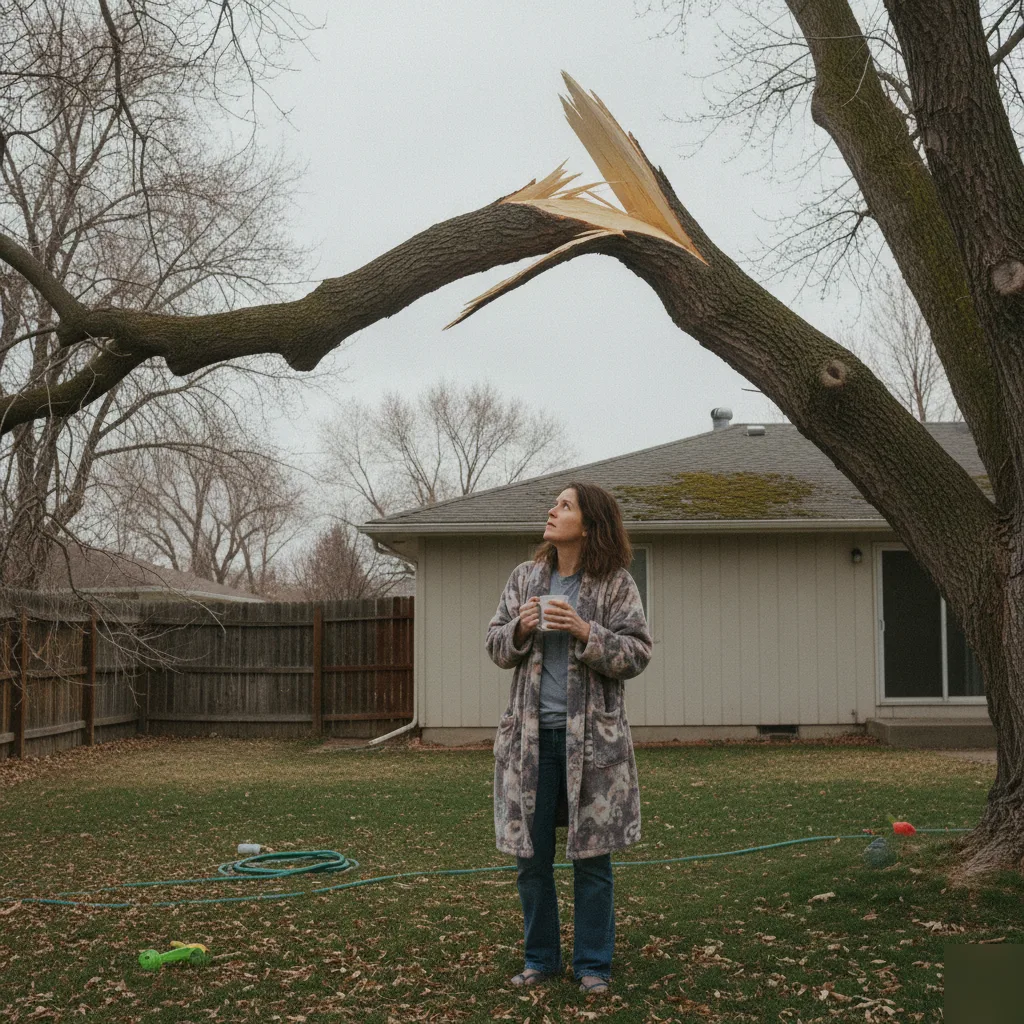
For a lot of homeowners, the first call to a tree service doesn't happen until something goes wrong — a big branch falls in a windstorm, heavy snow snaps a limb, or a tree suddenly starts leaning toward the house.
The truth is that trees usually give warning before they become hazardous. The hard part is knowing what to look for. Across the Salt Lake Valley we see the same problems year after year: northern Utah's dry summers, heavy winter snow, wind, and alkaline soils put steady stress on common tree species, and over time that stress turns into decay, weak limbs, poor root health, and structural failure.
The most common warning signs homeowners notice first
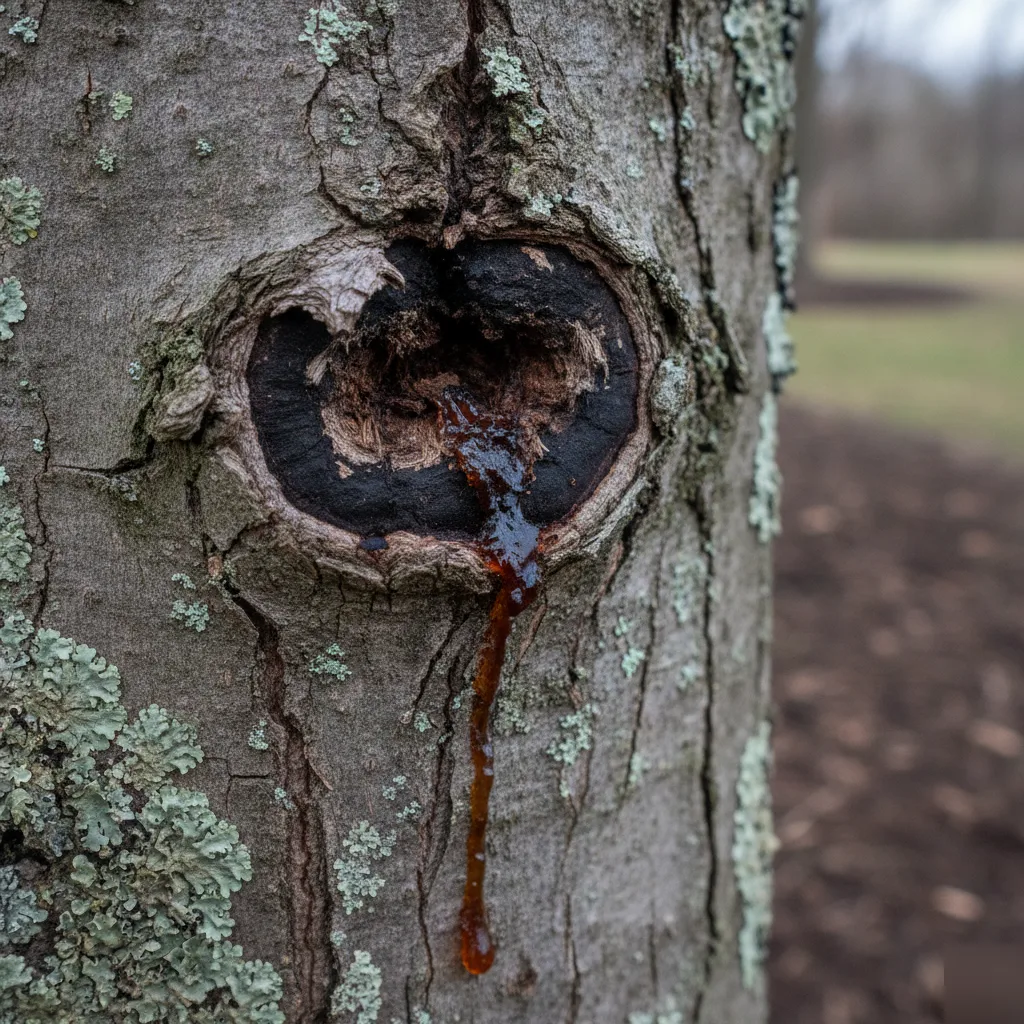
These are the signs most homeowners spot from the yard:
- Dead branches, or limbs hanging in the canopy. Branches with no leaves in the growing season, missing bark, or dry brittle wood are often dead — and dead limbs fall without much warning, especially in high wind or heavy snow.
- Cracks in the main trunk. A vertical crack running down the trunk can point to structural weakness. Not every crack means removal, but it should be inspected.
- Mushrooms or fungus near the base. Fungal growth around the trunk or root flare often means decay is active inside the tree or root system — even when the canopy still looks healthy.
- A tree that suddenly starts leaning. Some trees grow with a natural lean. A new lean that develops over a short period is different, and can mean roots are shifting or failing.
- Bark peeling, missing, or falling in large sections. Some species shed bark naturally, but large dead patches, exposed wood, or bark dropping unexpectedly can signal disease, decay, sunscald, or pests.
We recently inspected a mature ash after the homeowner noticed mushrooms around the base. From the street the canopy still looked full — up close, the root system showed serious decay, and the tree had become far more likely to fail in a windstorm. Catching it early let the homeowner deal with it before it hit the house.
Signs of trouble you might not see from the ground
Some problems start high in the canopy, where they're easy to miss: thinning leaves near the top, branches dying from the tips inward, small boring holes in the bark, unusual leaf size, or sections leafing out later than the rest of the tree.
These don't always mean the tree has to come down. In many cases early diagnosis gives you more options — pruning, a pest-treatment referral, watering changes, soil improvement, cabling, or a closer tree health evaluation. For conifers, USU researchers document detailed signs of needle-drop decline worth watching for. One thing we tell homeowners often: trust the change you notice. Trees rarely change fast without a cause.
Why timing matters in northern Utah
Northern Utah runs a predictable cycle of stress. Dry summer heat stresses the roots, autumn wind tests weak limbs, and winter brings heavy, wet snow. By spring, smaller problems that started months earlier become obvious. Many urgent calls land between late fall and early spring, when snow and wind expose damage that began during drought, disease, insect activity, or an old storm injury. If you see a warning sign before winter, don't ignore it — a small issue is far easier and cheaper to handle before the next storm loads the tree with snow.
Which signs mean call today, and which can wait
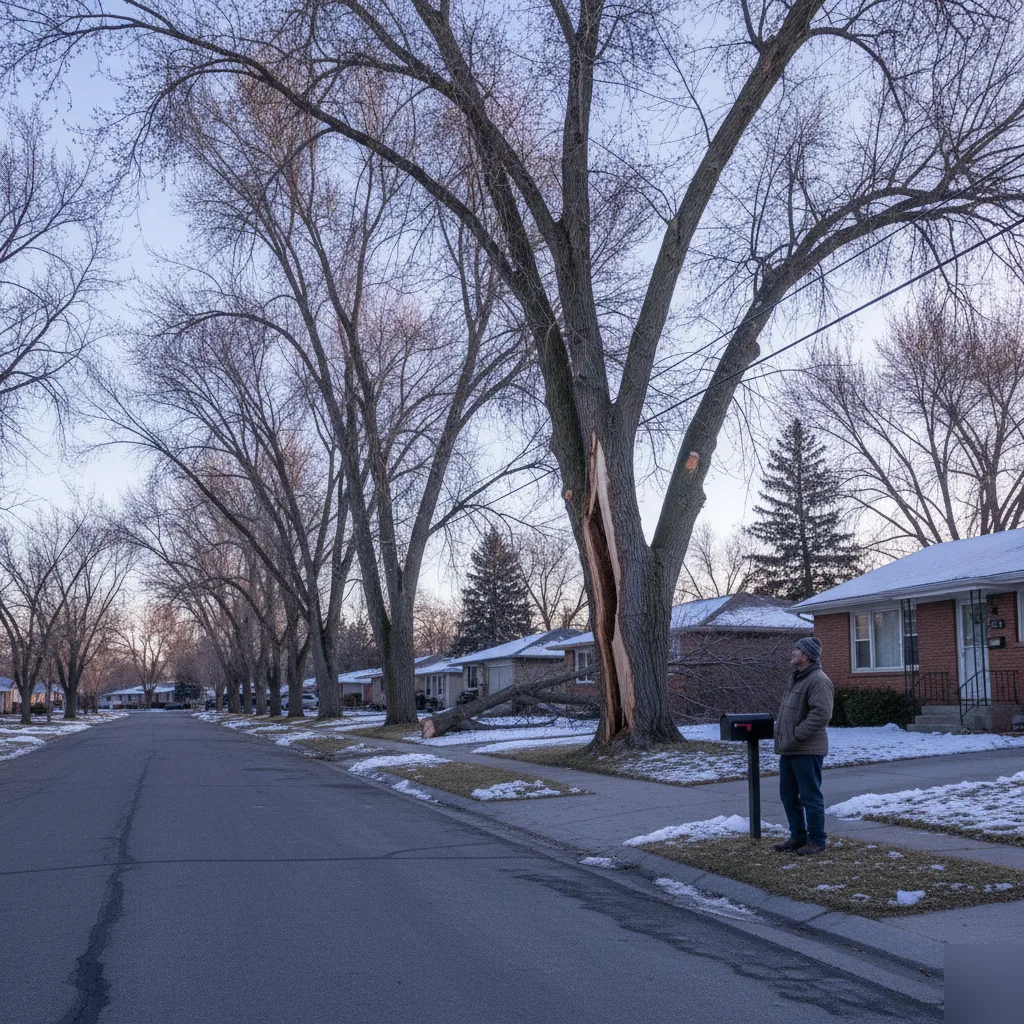
Not every tree problem is an emergency. Some can wait a few weeks; others need an arborist on site as soon as possible. Knowing the difference saves you stress, money, and risk.
Drop everything and make the call
A sudden lean after a storm is not the same as a tree that has leaned slightly for years — it can mean the root system is failing, and the tree may be unstable enough to come down within hours or days.
A large branch cracked, split, or hanging but still attached · the tree suddenly leaning toward a home, garage, driveway, or utility line · the root plate lifting or visible above ground · the trunk split open or cracked deeply · broken limbs caught high in the canopy after a storm · the tree touching or leaning near power lines.
Don't stand under the tree, pull on hanging limbs, or try to cut storm-damaged branches yourself. If a tree is near power lines, emergency tree service may require utility coordination before the work can be done safely. Rocky Mountain Power's vegetation-safety guidance is explicit about it: never prune limbs or remove trees near power lines yourself.
Serious, but you have time to act
Some signs are serious but not always immediate emergencies — handle them within days or weeks. A few dead branches may not fall today but can come down in the next windstorm; in many cases tree trimming and pruning removes the risk before it grows. Fungal growth at the base is another: mushrooms or bracket fungi point to decay that's likely been active for months or years. A tree health evaluation can determine how much sound wood remains, whether the tree can be treated, and whether tree removal is the safer option.
Monitor and plan
Not everything needs to send you into a panic. Slight leaf-color change in late summer may be heat stress; slower growth for one season doesn't always mean disease; a little deadwood on an older tree can be normal. Here you don't need urgent work — you need information. Still, a watch-and-wait issue can turn urgent after a storm. The better question isn't only "is my tree in bad shape?" — it's "what could happen to this tree during the next storm?"
Why the same defect doesn't always mean the same risk
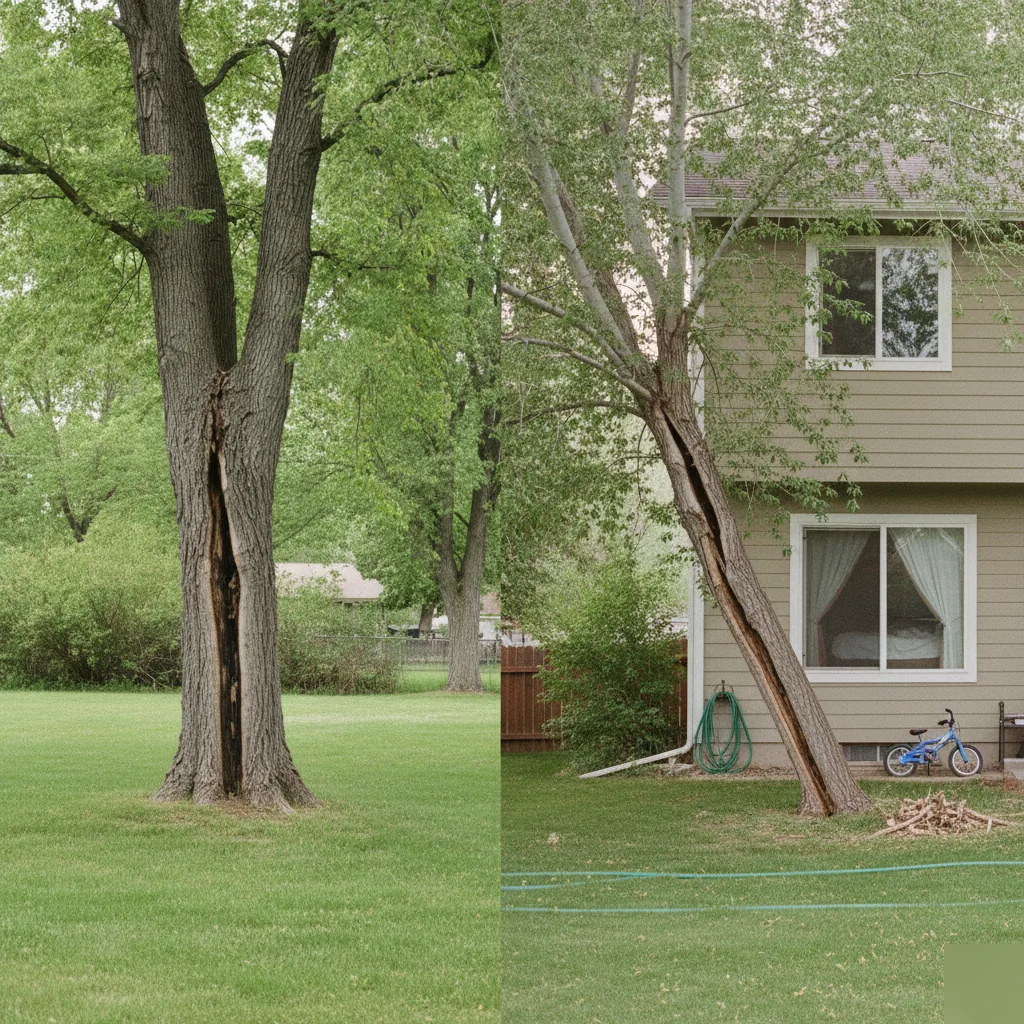
A dead limb on a small ornamental tree isn't the same as a dead limb hanging over a roof. A tree leaning over an open field isn't the same as one leaning over a driveway or power line. Context matters.
Species matters more than you'd think
Species changes how serious a sign is. A silver maple grows fast and can develop weak branch unions that split in wind or snow. A Gambel oak grows slower with stronger, denser wood. A mature Siberian elm may hold heavy limbs on tight attachments that need a closer look. Ash can decline from pests, drought, or disease before anything looks obviously wrong. That's why one crack or dead limb can't be judged in isolation — and why a trained ISA Certified Arborist can tell the difference before you make a decision.
Location on your property changes the urgency
The next question is simple: what happens if the tree fails? A weak limb over open grass is one level of risk; the same limb over a roof, car, sidewalk, or play area is another.
- A tree leaning toward a roof, shed, fence, or garage carries higher property-damage risk.
- A tree near utility lines can create an outage, fire hazard, or serious safety concern.
- A tree over a sidewalk, driveway, or public area raises injury and liability risk.
- A tree near a children's play area deserves more caution, even if the defect looks minor.
A tree risk assessment weighs both the condition of the tree and what's around it. Two trees with the same defect can have very different risk levels based on location.
Soil and weather history
Much of the Salt Lake Valley has heavy or alkaline soils that hold moisture in spring and turn dry and compacted in summer — a cycle that stresses roots over time. A tree that seems stable in July can behave differently after spring saturation, drought stress, or a heavy snow. We've removed trees and found internal damage from storms years earlier; the outside looked normal, the inside told a different story. That's why guessing is risky.
What a tree service inspection looks for
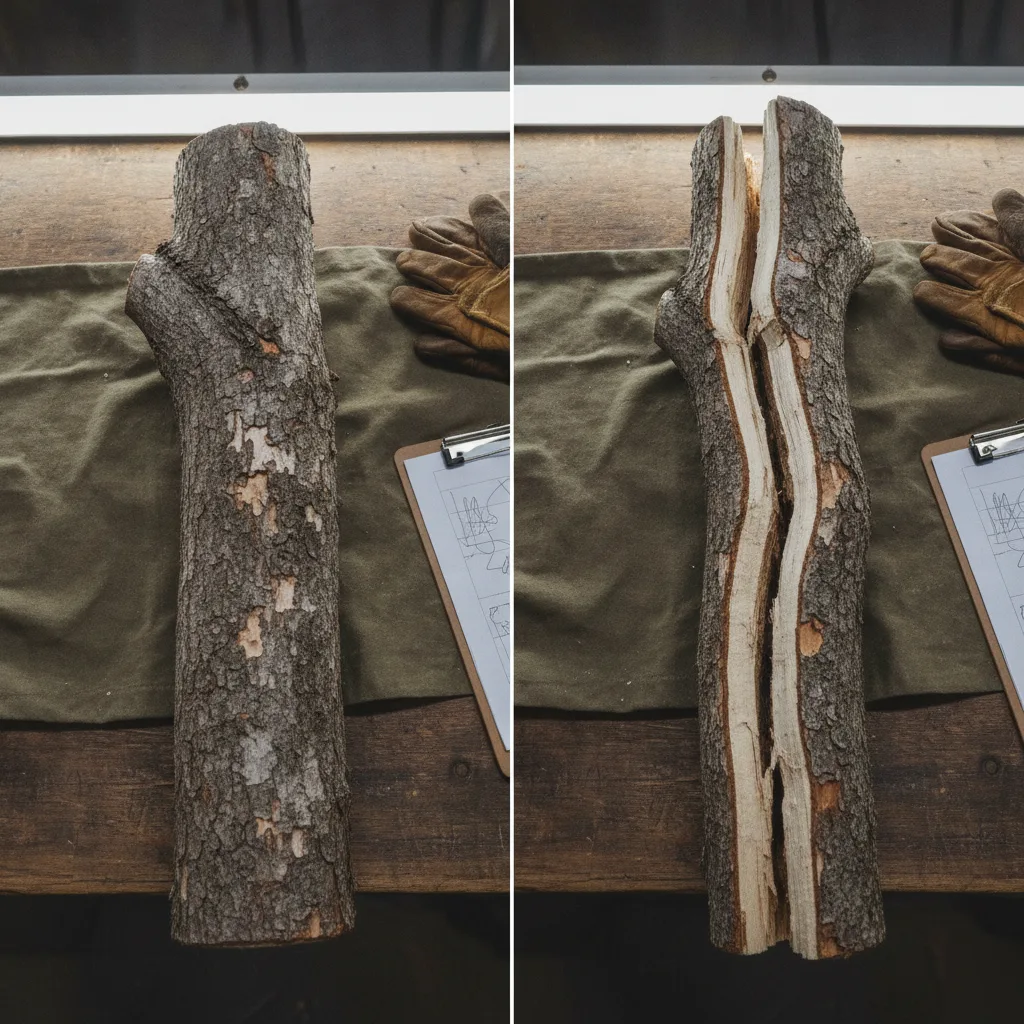
A good inspection is more than a glance at the branches. An experienced arborist reads the whole tree, roots to canopy, to decide whether it needs pruning, treatment, support, monitoring, or removal. During an inspection we look for:
- Root-flare problems — buried flares, girdling roots, or soil piled against the trunk.
- Root-plate movement — lifted soil, exposed roots, or cracking ground that points to instability.
- Codominant stems — two large stems from the same point that can split if the union is weak.
- Included bark — bark trapped between stems, creating a weak connection.
- Cavities and decay pockets — hollows, soft wood, and old wounds that reduce strength.
- Fungal conks or mushrooms — signs of decay in the trunk, buttress roots, or root system.
- Canopy thinning — sparse leaves, dieback, or delayed leaf-out.
- Insect activity — boring holes, sawdust-like frass, oozing sap, or tip dieback.
That's how a single warning sign gets matched to the right service: a dead branch may need pruning, a cracked trunk a risk assessment, a declining canopy a health diagnosis, and a failing tree near a structure a removal.
Can the tree be saved?
This is the question most homeowners actually care about. Sometimes the answer is yes, sometimes no — the warning sign alone doesn't decide it. Structure, species, location, health, and level of risk all matter. A tree may be saved with:
- Selective pruning to remove dead or weak limbs.
- Crown reduction to cut end-weight on overextended branches.
- Cabling or bracing to support weak unions.
- Improved watering or soil care.
- A referral for pest or disease treatment.
- Ongoing monitoring after a tree health assessment.
But some trees are too compromised to keep safely — severe root decay, a major trunk split, a sudden lean, advanced internal rot, or large dead sections over a target can make removal the responsible choice. A good tree service shouldn't rush you into removing a tree that can reasonably be saved, and shouldn't pretend a dangerous tree is fine because removal is inconvenient. The right recommendation protects your property, your budget, and the long-term health of your landscape.