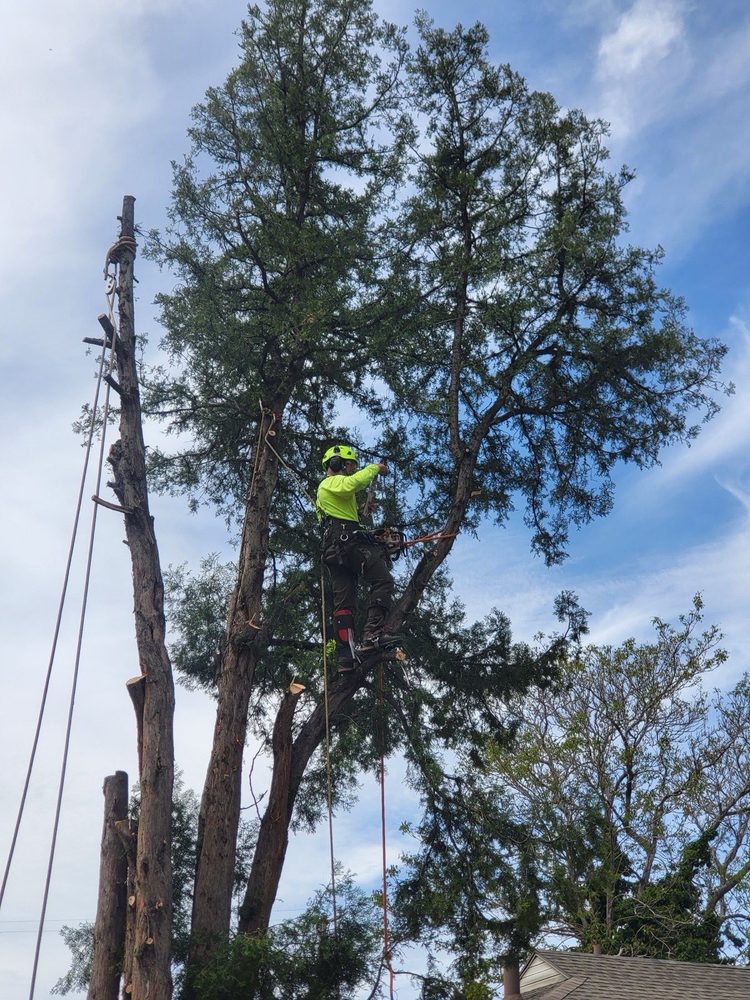
Tree Service in Salt Lake City, Utah
From the elm-lined streets of the Avenues to the maples of Sugar House and Yalecrest, Salt Lake City's urban canopy is one of the best on the Wasatch Front — and it takes a certified arborist to keep it that way. Michael Wilson diagnoses first and cuts second.
Salt Lake City's canopy is historic. It deserves a certified arborist.
Few cities its size have a tree canopy like Salt Lake's. The Avenues and Capitol Hill are shaded by century-old American and Siberian elms planted when the grid was laid out. Yalecrest and Harvard-Yale hold some of the finest Norway maple, oak, and honeylocust streetscapes in Utah. Sugar House and Liberty Wells mix mature catalpa, ash, and London plane around Liberty Park and Sugar House Park.
That maturity is a gift and a responsibility. Big old trees in tight historic lots — close to homes, garages, and power lines — need an arborist who can read structure and decay, not a crew paid by the removal. Michael Wilson is an ISA Certified Arborist who treats the city's canopy as something to preserve first and remove only when the evidence demands it. Many street and park-strip trees are city property, managed by Salt Lake City Urban Forestry — which handles public-tree permits and planting requests, and we coordinate with them when a job touches one.
He works the full city: Federal Heights and the East Bench up against the foothills, Rose Park and Glendale on the west side, the Marmalade and Downtown in between.
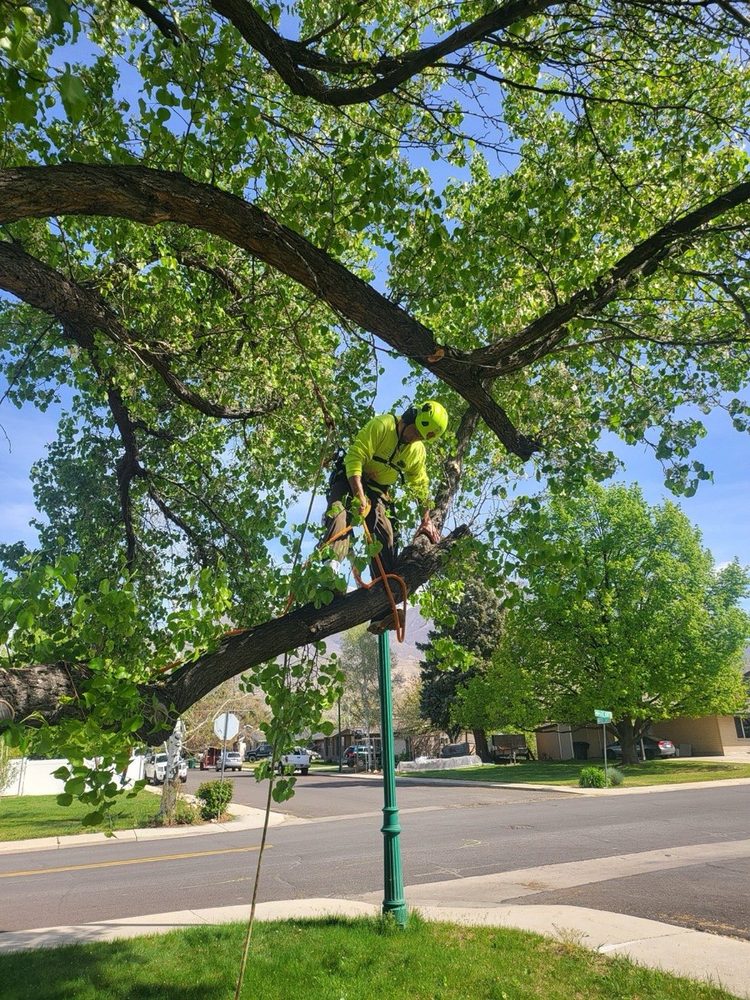
What grows in Salt Lake City — and what threatens it.
The valley floor sits around 4,300 ft on the old Lake Bonneville lakebed — heavy clay, high pH, and alkaline through and through. That single fact drives most of the tree problems in the city.
An aging hardwood canopy
American & Siberian elm, Norway and silver maple, honeylocust, green ash, catalpa, London plane, and blue spruce dominate the older neighborhoods. Many are mature and entering the stage where structural pruning and decay monitoring matter most.
Alkaline lakebed clay
SLC's clay-heavy, high-pH soils drain slowly and lock out iron and manganese. The result is widespread iron chlorosis — yellow leaves with green veins — that's constantly mistaken for disease and used to justify removing healthy trees.
Old elms & tight lots
Decades-old elms carry deadwood and included bark; the East Bench gets bark-splitting frost cracks; west-side and downtown lots crowd trees against structures. Each needs a certified eye before any cut — and careful rigging when removal is unavoidable.
Certified tree care, across the city.
Every service starts with an on-site assessment from an ISA Certified Arborist. Here's what Salt Lake City homeowners call Mikey for most.
Also offering emergency tree removal, stump grinding, cabling & bracing, pest diagnosis, and commercial & HOA tree care across Salt Lake City. See all services →
Local answers from a certified arborist.
Yes. SLC's older neighborhoods are full of mature American and Siberian elms that need careful structural pruning, deadwood removal, and monitoring for Dutch elm disease and decay. Michael assesses each tree's structure and health before recommending any work, and prioritizes preserving the historic canopy wherever it's safe to do so.
In Salt Lake City's heavy clay, high-pH lakebed soils, yellowing leaves with green veins are almost always iron chlorosis — the soil locking out iron, not a disease. It's treatable once correctly diagnosed — we confirm the cause and refer treatment to an authorized specialist — but it's commonly misread and healthy trees get removed unnecessarily.
Yes. Many SLC properties have large trees on narrow lots near homes, garages, and lines. Michael does the work himself with careful rigging and rope-access techniques, so removals and pruning happen safely without damaging structures or neighboring trees.
All of Salt Lake City proper — the Avenues, Federal Heights, Capitol Hill, Sugar House, Yalecrest, Liberty Wells, Rose Park, Glendale, Downtown and the East Bench — plus the surrounding Salt Lake Valley.
Nearby service areas
Protecting Salt Lake City's trees, one honest assessment at a time.
Tell Mikey what's happening in your yard. You'll get a certified arborist's read on your trees — before anyone touches a chainsaw.