By Mikey Wilson, ISA Certified Arborist (#UT-4612A) · Published November 11, 2026 · 8 min read
Start with what your tree needs, not with who to call. Once you know the problem, it is much easier to spot a good tree service in Salt Lake City and to avoid paying for the wrong job.
The trouble is that most people go looking right after something scares them. A limb cracks in a storm. A split shows up in the trunk. A neighbor's elm starts dropping branches on the fence. So they grab the first number that pops up and ask for a quote.
But here is the catch. You are shopping for a fix before you know what is broken. That is like hiring a roofer to tear off the whole roof over one water stain.
Watch: how to find a good tree service.
Prefer to watch on YouTube? Open the video on YouTube.
Before you hire a tree service, find out what the tree needs.
A tree that has to come down calls for different skills than a tree worth saving. Removal takes rigging, heavy equipment and a careful crew. Saving a tree takes someone who can read decay, root trouble and pest damage. Not every company does both well.
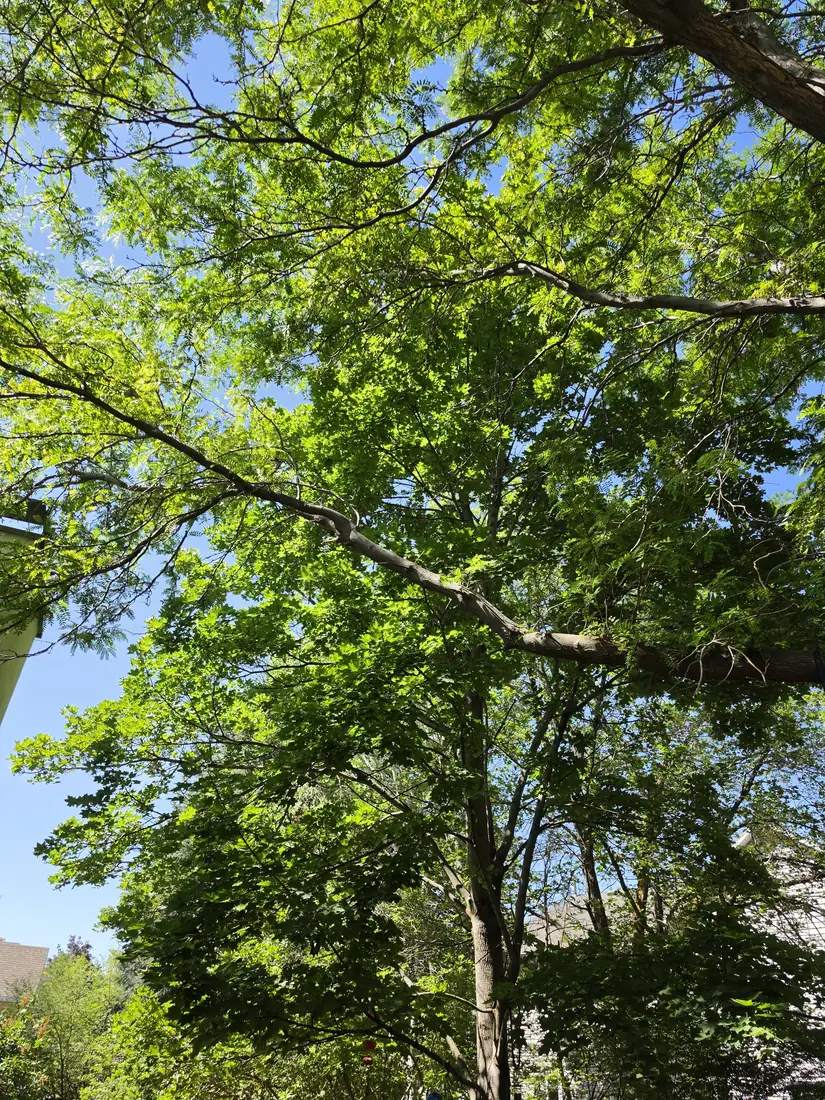
That is the trap in collecting quotes. A crew that is asked to price a removal prices a removal. Nothing in that request makes anyone look at the roots, the trunk or the way the limbs join. A tree that needs a different answer can be quoted three times for the wrong job.
In September 2023, a homeowner on the East Bench called me after three removal estimates on her silver maple. She said none of them had explained what was wrong beyond one heavy leader. I found a tight, V-shaped union with included bark, and the leader facing the driveway was carrying a lot of weight. There was no open crack and nothing wrong at the root flare. We reduced that leader by 10 to 15 percent of its foliage and added one cable between the two leaders. She kept the tree, and it was still standing the last time I saw it.
Before you call anyone, spend ten minutes looking at the tree from the ground. You do not need training to spot the basics. Write down what you notice, and stay out from under any limb that looks cracked or hanging:
- Dead branches or bare patches in the canopy, especially near the top
- Mushrooms or soft, crumbly wood around the base
- New cracks or splits, or a lean that was not there last year
- Holes in the bark, oozing sap or piles of sawdust-like debris
- How close it sits to your house, power lines or the park strip
Those notes change the call. Now you can ask a company what is causing the problem. A good one will want to come see the tree. A company that tosses out a number over the phone is guessing.
Salt Lake City adds a few twists. Dry summers stress trees, wet spring snow loads every branch, and strong downslope winds hit the Wasatch Front in some years. Structure matters: a weak union or a decayed limb is where a tree is most likely to let go.
If the tree is in the public right-of-way, which can include the park strip, Salt Lake City Urban Forestry requires a permit before it is removed, pruned or planted, and it issues permits only to ISA Certified Arborists. The city asks you to call its Urban Forestry office first to find out whether the tree is in the right-of-way.
Ask who will look at the tree.
So who should do the diagnosing? Ideally an ISA Certified Arborist. The credential means the person passed a 200-question exam that covers tree biology, diagnosis, pruning, tree risk and safe work practices, and they renew it every three years with continuing education. It does not make anyone perfect, but it does mean they have been tested on telling a stressed tree from a failing one.
A tree service, on the other hand, is any company that cuts, trims or removes trees. Utah has no state license for arborists, so training varies from one company to the next, and it is something you have to ask about. Ask whether the person looking at your tree holds ISA certification, and ask for the certification number. A certified arborist will give it to you. Mine is UT-4612A.
Be wary of anyone whose first answer is to cut the top out of a tree. The ISA calls topping "perhaps the most harmful tree pruning practice known."
If you want the full breakdown of how the two differ, it is in our guide to tree services versus certified arborists. You do not need it to hire well, but it covers the difference in detail.
Diagnose first. Hire second. A tree risk assessment or a Certified Arborist Tree Inspection can settle the question before a saw ever starts. Sometimes the answer is tree removal. Sometimes it is a light prune and some patience. Either way, you hire for the right job instead of the scariest guess. A consultation is a paid, on-site visit, and free estimates are for work you already know you want, like a removal or trimming.
Match the problem to the right kind of tree service.
You will find a good tree service faster when you know what kind of help you are shopping for. A crew that is great at hedge trimming may be the wrong call for a sick, mature cottonwood.
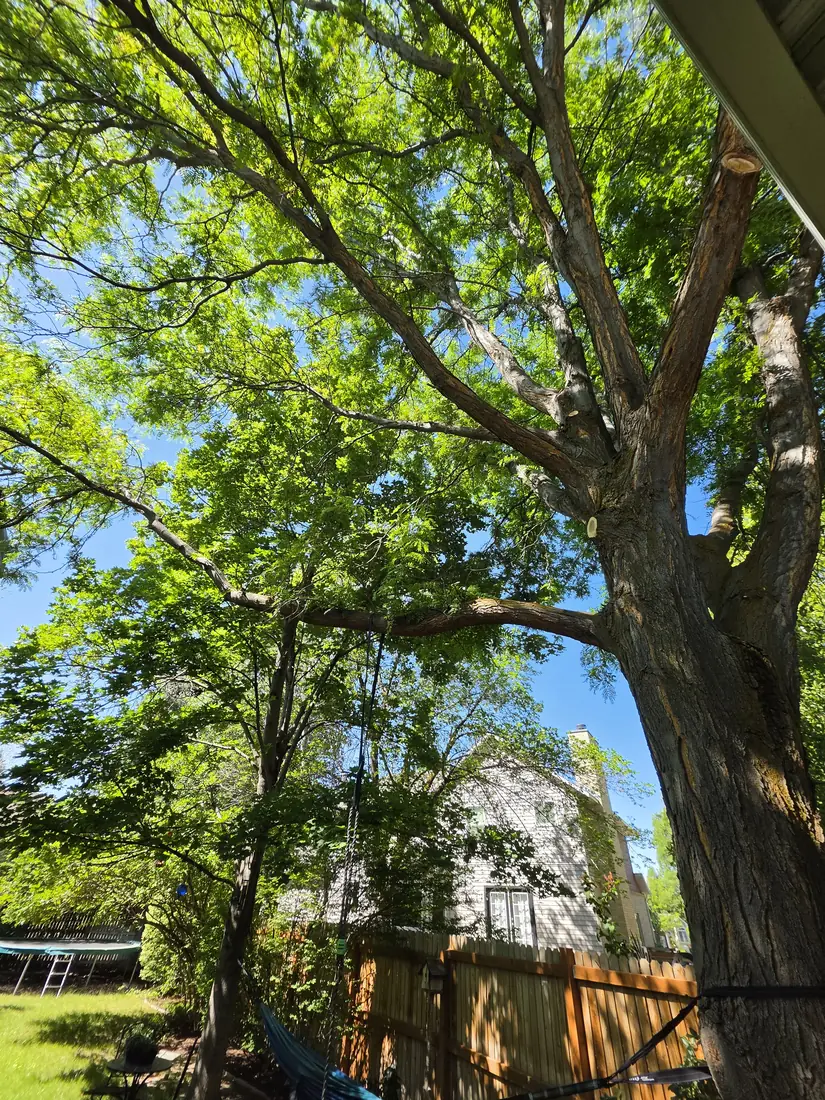
Most tree problems fall into four buckets. Here is how I sort them when I walk a property:
- Trimming and pruning. Limbs over the roof, branches rubbing the house, or a crown that has grown too thick. This covers crown thinning, crown reduction, deadwooding and fruit tree trimming.
- A health or risk check. Thin leaves, early leaf drop, oozing bark, mushrooms at the base, or a new lean. A tree health assessment or tree risk assessment should come before anyone starts cutting.
- Removal. The tree is dead, badly diseased, or failing in a way that pruning cannot fix. Stump grinding can be quoted along with the removal.
- Emergency work. A limb on your roof, a trunk split after a storm, or branches tangled in power lines. True emergencies are handled 24/7. Stay clear of downed lines and call 911 first if lines are involved.
The tricky part is that many trees look like they are in one bucket when they are really in another. A dropped limb does not always mean a doomed tree, and a solid-looking trunk does not always mean a sound one. A tree can look fixable from the street and still be hollow at the base. Another can look finished after losing a limb and still have a healthy trunk and roots. You cannot tell from the curb.
In July 2021, a storm broke a 10-inch limb out of a Siberian elm in Murray, and the homeowner wanted the whole tree removed. The break had started at an old pruning wound with decayed wood, so I checked the rest of the tree, including the unions, the trunk and the root flare. I found no matching decay anywhere else. We removed the broken material, reduced a couple of long limbs and took out the deadwood. The tree was still there a few years later.
In April 2024, a homeowner on the East Bench asked me to trim a silver maple whose branches were close to the roof. Before pricing the job, I walked around the trunk and found a 10 to 12 inch opening near the base, with decayed wood inside. You could not see it from the street. We could have made the canopy look great, but that would not have changed what was happening at the base. He chose to have the tree removed, and we took it down in sections because of the house and driveway. The work people call you about is not always the work the tree actually needs.
Snap photos of the whole tree, the base and any damage before you call. A good arborist can tell a lot from them, and it helps you compare what each company tells you.
This is why diagnosis comes first. A tree service that shows up and starts quoting cuts without looking at the trunk, roots and canopy is guessing. A certified arborist tree inspection gives you a straight answer on what is wrong and what the tree needs. You also learn what can wait. Sometimes the honest answer is "leave it alone and check it next year." A company that will tell you that is usually one worth trusting.
That order is how we work. We are owner-operated, so the person who looks at your tree is the same person accountable for the work. Not sure which bucket your tree is in? That is normal. Call and tell me what you are seeing.